

I first made this lemon cheesecake on a sunny weekend when I wanted a dessert that tasted like spring but felt indulgent. It is a creamy, tangy cheesecake with a buttery graham crust and just enough lemon to brighten each bite. It works for a casual brunch, a dinner party finale, or any time you want a show-stopping dessert with simple ingredients. If you like pairing citrus desserts with citrus mains, try the Slow Cooker Lemon Herb Chicken recipe for a complementary menu.
What makes this recipe special
This version of lemon cheesecake is straightforward and forgiving. It uses pantry staples and one familiar technique: slow, gentle baking to avoid cracks. The fresh lemon juice and zest give clear citrus brightness without overpowering the creamy richness of the cream cheese. Because it chills and sets in the fridge, you can bake it a day ahead and free up time on the day of serving. It is also kid friendly, easy to scale for a crowd, and a reliable option when you want dessert that looks more elaborate than the effort it takes.
Step-by-step overview
You will press a buttery graham cracker crust into a springform pan, whip the cream cheese until smooth, fold in sugar, eggs, sour cream, lemon juice, and zest, then bake gently at 325°F. After baking, cool slowly in the oven, then chill until fully set. The overall hands-on time is about 25 minutes and the waiting and chilling take several hours.
What you’ll need
- 1 1/2 cups graham cracker crumbs (about 10 to 12 full crackers crushed). Substitute digestive biscuits if graham crackers are not available.
- 1/2 cup unsalted butter, melted (use salted and reduce added salt elsewhere if you prefer salted butter).
- 3 (8-ounce) packages cream cheese, softened to room temperature.
- 1 cup granulated sugar.
- 1 teaspoon vanilla extract.
- 3 large eggs, at room temperature. Room-temp eggs incorporate more smoothly.
- 1/2 cup sour cream. Plain Greek yogurt can work in a pinch but changes texture slightly.
- 1/4 cup fresh lemon juice (about 1 large lemon). Fresh juice brightens more than bottled.
- Zest of 1 lemon. Use a microplane for fine zest and avoid the bitter white pith.
- Whipped cream and lemon slices for topping, optional.
Directions to follow
- Preheat the oven to 325°F (160°C). Grease a 9-inch springform pan and set it aside.
- Combine the graham cracker crumbs and melted butter in a bowl. Stir until the crumbs are evenly moistened.
- Press the crumb mixture firmly into the bottom of the springform pan to form an even crust. Use the bottom of a measuring cup to compact it.
- In a large bowl, beat the softened cream cheese until smooth and lump free. Work gently to avoid aerating too much.
- Gradually add the sugar while beating. Mix until the sugar is fully incorporated. Stir in the vanilla.
- Add the eggs one at a time. Mix only briefly after each egg until it is incorporated. Overmixing can add air and cause cracks.
- Fold in the sour cream, lemon juice, and lemon zest until just combined. Stop as soon as the batter is smooth.
- Pour the filling over the prepared crust and smooth the top with an offset spatula. Tap the pan lightly to release any large air bubbles.
- Bake for 50 to 60 minutes. The edges should be set and lightly golden while the center remains slightly jiggly.
- Turn off the oven. Leave the cheesecake inside with the oven door ajar for one hour to cool slowly. This prevents sudden temperature change that can crack the top.
- Remove the cheesecake from the oven and cool to room temperature on the counter. Then refrigerate for at least four hours or overnight to fully set.
- Before serving, top with whipped cream and lemon slices if desired.

How to plate and pair
Serve slices chilled for the cleanest texture. A thin smear of lemon curd or a small spoonful of berry compote beside each slice adds color and contrast. Garnish with a light swirl of whipped cream and a thin lemon wheel or microplane zest. For a balanced meal, this dessert follows lightly seasoned mains well. For example, serving it after a lemon-forward savory main like slow cooker lemon herb chicken keeps the menu cohesive and bright.
How to store & freeze
- Refrigerate: Store leftover cheesecake in the refrigerator covered with plastic wrap or in an airtight container. It will keep well for up to 4 to 5 days.
- Freeze: To freeze, wrap the whole cheesecake or individual slices tightly in plastic wrap and then in foil or a freezer bag. Freeze for up to 2 months.
- Thawing: Thaw in the refrigerator overnight. Avoid thawing at room temperature to prevent condensation that makes the crust soggy.
- Food safety: Keep the cheesecake refrigerated at 40°F or below. Discard if left out at room temperature for more than two hours.
Pro chef tips
- Start with room temperature cream cheese and eggs to create a silky batter with fewer lumps.
- Avoid overmixing once the eggs are added. Mix until just incorporated. This reduces air in the batter that can cause cracks.
- Use a water bath if you want extra insurance against cracks. Wrap the springform pan in foil and bake in a larger pan with hot water about halfway up the sides.
- Check doneness by gently jiggling the pan. The center should wobble slightly while the edges are set. An internal temperature of around 150 to 155°F indicates doneness.
- Let the cheesecake cool gradually in the oven with the door ajar for one hour. Rapid cooling is a common cause of cracks.
- For a clean slice, chill the cheesecake thoroughly and wipe a hot knife between cuts.
Flavor swaps
- Lemon curd topping: Spoon or pipe lemon curd over the chilled cheesecake for concentrated citrus flavor.
- Berry swirl: Fold a thin swirl of raspberry or blueberry puree into the batter before baking for a marbled effect.
- Citrus mix: Replace half the lemon juice with orange juice and add orange zest for a sweeter citrus profile.
- Gluten free: Use gluten-free graham crackers or finely ground nuts combined with a touch of sugar for the crust.
- Lighter option: Substitute part of the cream cheese with mascarpone for a silkier texture, or use full-fat Greek yogurt instead of sour cream to alter tang and texture slightly.
Common questions
How long does this cheesecake take from start to finish?
Hands-on time is about 20 to 30 minutes. Bake time is 50 to 60 minutes. Cooling in the oven takes one hour, then refrigeration for at least four hours or preferably overnight. Plan for a total of about 6 to 8 hours including chilling.
Can I use bottled lemon juice instead of fresh?
Fresh lemon juice gives the best flavor and brightness. Bottled juice can be used in a pinch, but reduce the amount slightly and taste the batter before baking since bottled juice sometimes tastes sharper or flatter.
Why did my cheesecake crack and how do I fix it next time?
Cracks commonly result from overmixing, too much oven heat, or rapid cooling. To avoid them, mix gently after adding eggs, bake at a low temperature, consider a water bath, and cool slowly by leaving the oven door ajar. If a crack appears, cover it with whipped cream or lemon curd for a pretty finish.
Can I make this ahead for a party?
Yes. You can bake the cheesecake the day before and chill it overnight. For longer prep, freeze fully chilled slices up to two months and thaw in the fridge the day before serving.
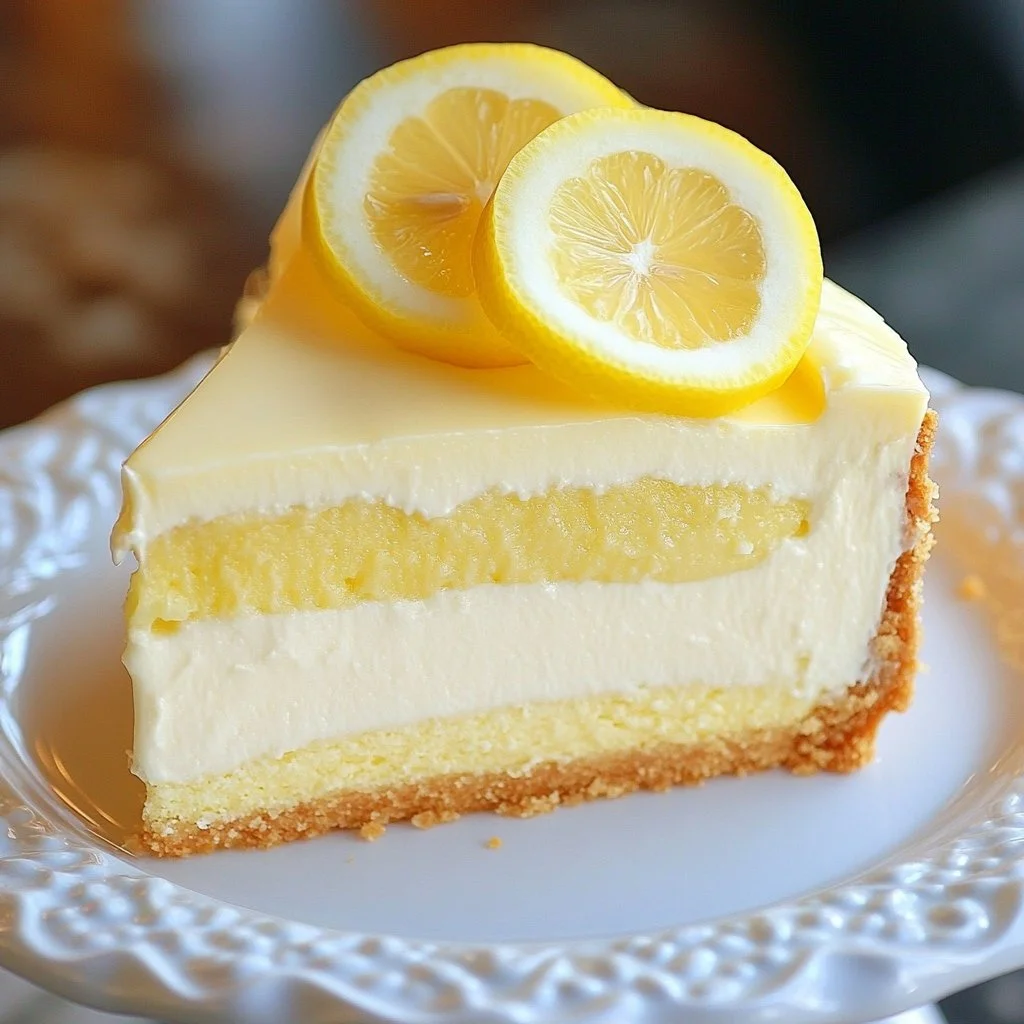
Lemon Cheesecake
Ingredients
Method
- Preheat the oven to 325°F (160°C). Grease a 9-inch springform pan and set it aside.
- Combine the graham cracker crumbs and melted butter in a bowl. Stir until the crumbs are evenly moistened.
- Press the crumb mixture firmly into the bottom of the springform pan to form an even crust. Use the bottom of a measuring cup to compact it.
- In a large bowl, beat the softened cream cheese until smooth and lump free. Work gently to avoid aerating too much.
- Gradually add the sugar while beating. Mix until the sugar is fully incorporated. Stir in the vanilla.
- Add the eggs one at a time. Mix only briefly after each egg until it is incorporated. Overmixing can add air and cause cracks.
- Fold in the sour cream, lemon juice, and lemon zest until just combined. Stop as soon as the batter is smooth.
- Pour the filling over the prepared crust and smooth the top with an offset spatula. Tap the pan lightly to release any large air bubbles.
- Bake for 50 to 60 minutes. The edges should be set and lightly golden while the center remains slightly jiggly.
- Turn off the oven. Leave the cheesecake inside with the oven door ajar for one hour to cool slowly. This prevents sudden temperature change that can crack the top.
- Remove the cheesecake from the oven and cool to room temperature on the counter. Then refrigerate for at least four hours or overnight to fully set.
- Before serving, top with whipped cream and lemon slices if desired.


