

I first made this Winter Dream Cake on a snowy afternoon when I wanted something simple, tender, and a little festive. It’s a classic two-layer vanilla cake with a pillowy buttercream and a sprinkling of sparkling sugar on top. Home bakers reach for this when they want an elegant-looking dessert without a fussy technique, and it’s especially nice for casual holiday gatherings, birthdays, or when you want a reliable showstopper. If you enjoy moist, old-fashioned cakes, you might also like this take on a gluten-free option at flourless oatmeal carrot cake.
Why you’ll love this dish
This cake is comforting, straightforward, and crowd-pleasing. The batter uses pantry staples and a simple creaming method that creates a fine crumb and even rise. It’s:
- Kid-approved and approachable for novice bakers.
- Budget-friendly because it relies on everyday ingredients.
- Flexible: the buttercream is an easy canvas for colors or flavors.
- Perfect for occasions when you want a homemade dessert that looks polished.
Make it when you need a dessert that travels well, pairs with coffee or tea, or when you want to practice classic cake-building skills like leveling and crumb coating.
The cooking process explained
Before you start, the plan is simple: cream the butter and sugar, add eggs and vanilla, fold in dry ingredients alternating with milk, bake in two 9-inch pans, cool completely, then assemble with buttercream. Expect active hands-on time of about 30 to 40 minutes and total time including baking and cooling of roughly 2 to 2.5 hours. The technique focuses on not overmixing the batter and cooling fully so the frosting doesn’t slide.
Gather these items
What you’ll need:
- 2 cups all-purpose flour (or swap half for cake flour for a lighter crumb)
- 1 1/2 cups granulated sugar
- 1/2 cup unsalted butter, softened (for the cake)
- 1 cup milk, whole milk recommended for richness (or buttermilk thinned with a little milk)
- 3 1/2 teaspoons baking powder (check it’s fresh for best rise)
- 1 teaspoon vanilla extract (for the cake)
- 1/2 teaspoon salt
- 4 large eggs
- 2 cups powdered sugar (for the frosting)
- 1 cup unsalted butter, softened (for the frosting)
- 2 teaspoons vanilla extract (for the frosting)
- 1 to 2 tablespoons milk (for the frosting)
- Sparkling sugar for decoration
Notes and quick swaps: use room-temperature eggs for a more stable batter; if you need dairy-free, substitute the milk with unsweetened oat milk and use plant-based butter.
Directions to follow
- Preheat the oven to 350°F (175°C). Grease and flour two 9-inch round cake pans, or line them with parchment rounds.
- In a large bowl, beat 1/2 cup softened butter with 1 1/2 cups granulated sugar until the mixture is light and fluffy, about 3 to 4 minutes.
- Add the eggs one at a time, mixing well after each addition, then stir in 1 teaspoon vanilla. Scrape the bowl as needed.
- In a separate bowl, whisk together 2 cups flour, 3 1/2 teaspoons baking powder, and 1/2 teaspoon salt.
- Add the dry ingredients to the butter-egg mixture in three parts, alternating with 1 cup milk. Begin and end with the dry ingredients. Mix just until combined; do not overmix.
- Divide the batter evenly between the prepared pans and smooth the tops with a spatula.
- Bake for 25 to 30 minutes, or until a toothpick inserted in the center comes out clean and the tops spring back lightly when pressed.
- Let the cakes cool in the pans for 10 minutes, then run a knife around the edges and turn them out onto wire racks to cool completely.
- For the frosting, beat 1 cup softened butter until creamy. Gradually add 2 cups powdered sugar until mostly incorporated. Mix in 2 teaspoons vanilla and 1 to 2 tablespoons milk until the frosting is light and spreadable. Taste and adjust for sweetness or consistency.
- Level the cake layers if needed. Place one cooled layer on your serving plate, spread a layer of frosting, top with the second layer, then frost the top and sides. A thin crumb coat followed by a chilled set and a final coat gives the cleanest finish.
- Sprinkle sparkling sugar lightly over the top for decoration. Slice and serve at room temperature for best texture.

Best ways to enjoy it
Serve slices on simple white plates so the sparkling sugar stands out. Pair the cake with freshly brewed coffee, a pot of black tea, or a citrusy herbal tea to balance the richness. For a slightly fancier presentation, top each slice with a few fresh berries or a mint sprig. This cake also works as a dessert buffet centerpiece—cut into wedges and offer a small dollop of whipped cream on the side.
Storage and reheating tips
Store the frosted cake at room temperature for up to 24 to 48 hours in a cool place away from direct sunlight. If your kitchen is warm, refrigerate it in an airtight cake box to protect the frosting; bring slices to room temperature before serving to restore softness. To freeze: wrap unfrosted, leveled layers tightly in plastic wrap and then foil for up to 2 months. Thaw in the refrigerator overnight, then bring to room temperature before frosting. Always use clean utensils when serving and avoid leaving cut cake at room temperature for more than 2 hours in warm environments.
Pro chef tips
- Use room-temperature ingredients. Butter and eggs at room temp produce a smoother batter and better rise.
- Don’t overmix after adding flour. Stir until just combined to keep the crumb tender.
- Fresh baking powder matters. If it’s older than 6 months, replace it for reliable lift.
- Level and chill. A thin crumb coat and a short chill makes final frosting easier and neater.
- If frosting gets too soft while you work, pop the cake in the fridge for 10 to 15 minutes to firm up the buttercream.
Flavor swaps
- Lemon twist: add 1 tablespoon finely grated lemon zest to the batter and a teaspoon of lemon juice to the frosting.
- Chocolate version: replace 1/3 cup flour with 1/3 cup unsweetened cocoa powder and add 2 to 3 tablespoons extra milk if needed.
- Nutty crunch: fold 1/2 cup chopped toasted almonds into the layer between cakes.
If you want a little snack inspired by cake batter flavor but in a different format, try this easy no-bake option for no-bake cake batter protein balls.
Helpful answers
How long does this cake take from start to finish?
Plan for about 2 to 2.5 hours total. Active prep is roughly 30 to 40 minutes. Baking takes 25 to 30 minutes, and you’ll need additional time for cooling and assembling.
Can I make the cake layers ahead of time?
Yes. Bake the layers and cool completely, then wrap each tightly and freeze for up to 2 months. Thaw in the refrigerator overnight before frosting. You can also bake a day ahead and keep unfrosted layers wrapped in the fridge.
Can I substitute oil for butter in the cake?
You can substitute 1/2 cup neutral oil for the 1/2 cup butter to make the cake a bit more moist, but the flavor and crumb will be slightly different. If you do, reduce mixing time and ensure everything is well combined.
Is the frosting safe to leave on the cake at room temperature?
Buttercream made with only butter and powdered sugar is stable at cool room temperature for a day or two. In warmer conditions, refrigerate the cake and bring slices to room temperature before serving.
Can I color or pipe the frosting?
Yes. Use gel food coloring to avoid thinning the frosting, and chill slightly if it becomes too soft for piping. For delicate piping work, a firmer consistency helps maintain shape.
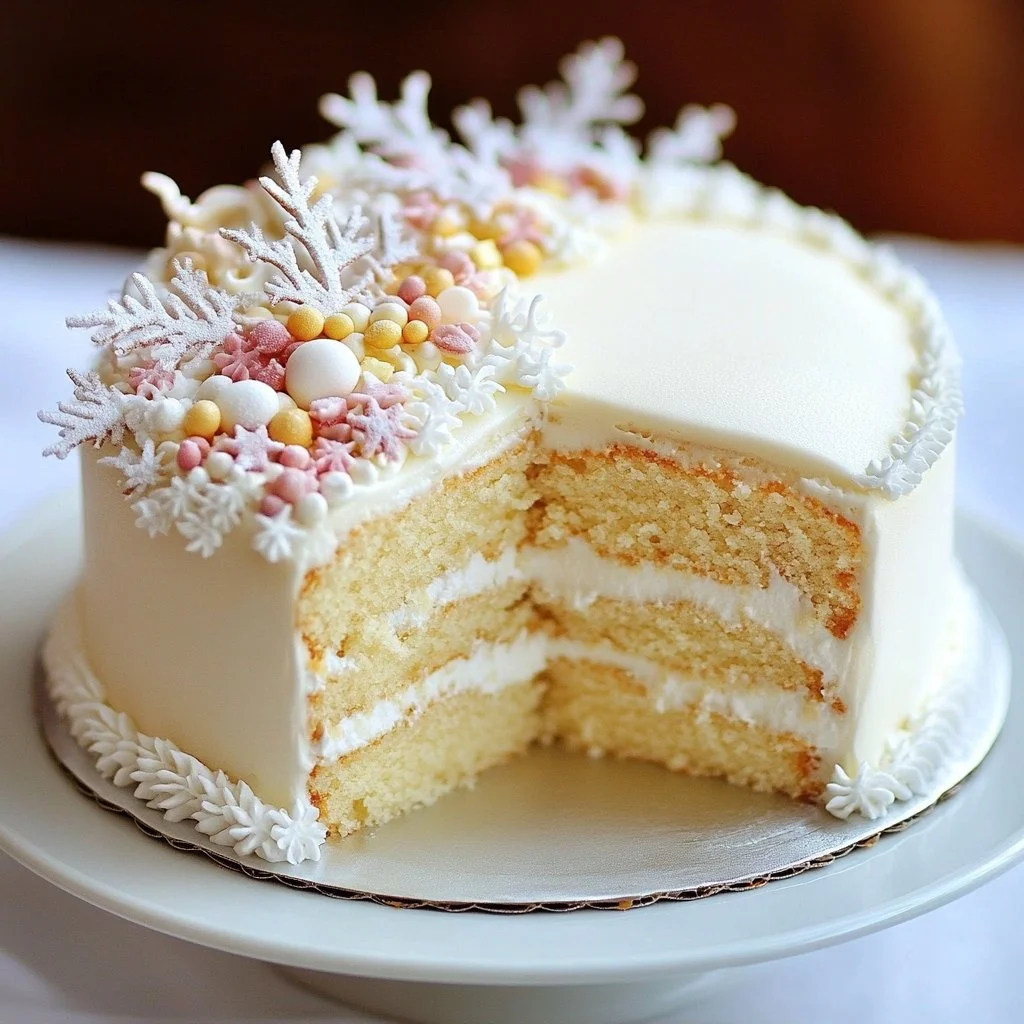
Winter Dream Cake
Ingredients
Method
- Preheat the oven to 350°F (175°C). Grease and flour two 9-inch round cake pans, or line them with parchment rounds.
- In a large bowl, beat 1/2 cup softened butter with 1 1/2 cups granulated sugar until the mixture is light and fluffy, about 3 to 4 minutes.
- Add the eggs one at a time, mixing well after each addition, then stir in 1 teaspoon vanilla. Scrape the bowl as needed.
- In a separate bowl, whisk together 2 cups flour, 3 1/2 teaspoons baking powder, and 1/2 teaspoon salt.
- Add the dry ingredients to the butter-egg mixture in three parts, alternating with 1 cup milk. Begin and end with the dry ingredients. Mix just until combined; do not overmix.
- Divide the batter evenly between the prepared pans and smooth the tops with a spatula.
- Bake for 25 to 30 minutes, or until a toothpick inserted in the center comes out clean and the tops spring back lightly when pressed.
- Let the cakes cool in the pans for 10 minutes, then run a knife around the edges and turn them out onto wire racks to cool completely.
- For the frosting, beat 1 cup softened butter until creamy. Gradually add 2 cups powdered sugar until mostly incorporated. Mix in 2 teaspoons vanilla and 1 to 2 tablespoons milk until the frosting is light and spreadable. Taste and adjust for sweetness or consistency.
- Level the cake layers if needed. Place one cooled layer on your serving plate, spread a layer of frosting, top with the second layer, then frost the top and sides.
- Sprinkle sparkling sugar lightly over the top for decoration. Slice and serve at room temperature for best texture.


